
Car Service in Poole: What You Need to Know
October 16, 2026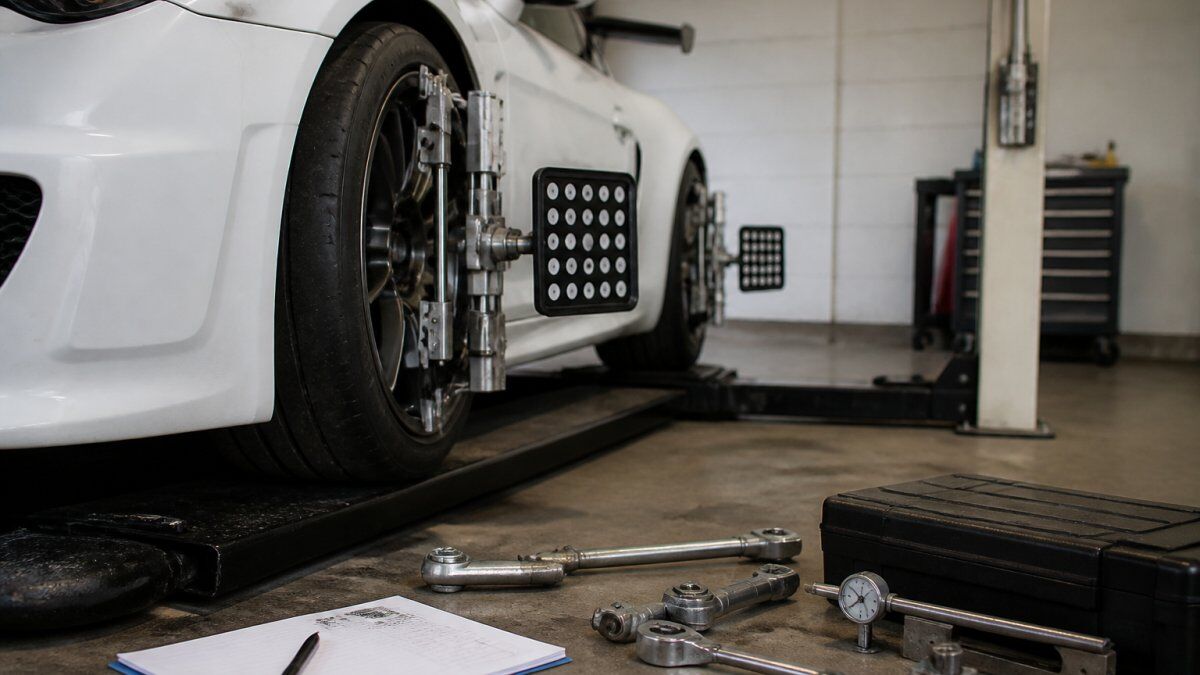
Wheel alignment for track cars: A 2026 guide
October 19, 2026
Table of Contents
- What Affects Four Wheel Alignment Cost
- Signs Your Car Needs Wheel Alignment
- What Is Included in a Four-Wheel Alignment
- How Long Does a Wheel Alignment Take
- Wheel Alignment After New Tyres
- Four Wheel Alignment Cost for Track and Performance Vehicles
- Getting a Quote for Your Four Wheel Alignment
- Frequently Asked Questions
Last Updated: October 17, 2026
What Affects Four Wheel Alignment Cost
The price of a four-wheel alignment depends on several factors. Your vehicle type, the complexity of the adjustment, and the technology used all play a role. Understanding these variables helps you budget properly and know what to expect when you book an appointment.
Different vehicles require different approaches. A standard saloon needs less time than a performance car or SUV. Some cars have more accessible suspension components than others, which affects labour time. We assess each vehicle individually because no two alignment jobs are identical.
The equipment used also influences four wheel alignment cost. Modern laser alignment systems are more precise than older methods, but they require specialist training and investment. Some garages use 3D imaging technology, which provides detailed readings and can catch issues other methods miss.
Ask your garage whether they use laser or 3D alignment equipment. Precision matters, especially for performance vehicles where handling is critical.
Your vehicle’s condition matters too. If suspension components are worn or damaged, alignment becomes more complex. The technician may need to replace parts before proper alignment is possible. This can add to the overall four wheel alignment cost.
Whether you need a standard alignment or a track-specific setup also affects pricing. Performance vehicles often need custom specifications that differ from factory settings. Track day cars may require more aggressive geometry to suit racing conditions.
Signs Your Car Needs Wheel Alignment
Your car sends clear signals when alignment is off. The most obvious sign is uneven tyre wear. Check your tyres regularly, worn inner or outer edges suggest alignment problems. Uneven wear shortens tyre life and increases your four wheel alignment cost over time because you’ll replace tyres more often.
Steering feel is another indicator. If your steering wheel pulls to one side while driving straight, alignment is likely the issue. Some drivers notice the steering wheel is off-centre even when driving straight. These are signs you need alignment checked soon.
Vibration in the steering wheel during normal driving can point to alignment issues. This differs from vibration caused by brake problems or unbalanced wheels. A qualified technician can distinguish between these causes during diagnosis.
Your handling may feel sluggish or imprecise. The car might not respond as sharply to steering inputs. Performance cars are especially sensitive to alignment, even small deviations affect how the vehicle behaves on track.
| Sign | What It Means | Action |
|---|---|---|
| Uneven tyre wear | Suspension geometry is wrong | Book alignment check |
| Steering pulls to one side | One wheel is out of alignment | Get professional diagnosis |
| Off-centre steering wheel | Toe or camber is incorrect | Alignment adjustment needed |
| Sluggish handling | Geometry affects responsiveness | Check suspension and alignment |
| Steering vibration | Possible alignment or balance issue | Professional inspection required |
Listen to your tyres too. Unusual noise while turning or accelerating can indicate alignment problems. Some drivers hear a squealing sound from tyres when cornering hard. This suggests the tyres are fighting against incorrect geometry.
What Is Included in a Four-Wheel Alignment
A proper four-wheel alignment covers several specific measurements and adjustments. The process checks three key angles: camber, toe, and caster. Each angle affects how your tyres contact the road.

Camber measures whether your wheels tilt inward or outward when viewed from the front. Incorrect camber causes one edge of the tyre to wear faster. The alignment technician adjusts camber to factory specifications or, for performance vehicles, to custom settings that suit your driving style.
Toe refers to whether your tyres point slightly inward or outward. Toe problems are the most common cause of uneven tyre wear. This adjustment is critical for both road cars and track vehicles.
Caster is the angle of your steering axis when viewed from the side. It affects steering stability and how the car feels on the road. Caster adjustment is less common than camber or toe, but it’s checked during a full four wheel alignment.
A comprehensive alignment includes:
- Visual inspection of suspension components
- Measurement of all four wheels against factory or custom specifications
- Adjustment of camber, toe, and caster as needed
- Road test to confirm proper handling
- Written report of measurements before and after
For performance vehicles, the process may include additional steps. Track-focused setups require different geometry than road cars. The technician discusses your intended use, road, track day, or racing, and sets alignment accordingly.
A full four wheel alignment checks three critical angles and adjusts them to match your vehicle’s needs. This ensures even tyre wear, proper handling, and safety.
How Long Does a Wheel Alignment Take
Most standard wheel alignments take between 30 and 60 minutes. The exact time depends on your vehicle and how far out of alignment it is. Simple adjustments on accessible vehicles happen faster than complex jobs on performance cars.
Initial inspection and setup takes time. The technician positions your car on the alignment rack, attaches sensors or targets to each wheel, and runs baseline measurements. This preparation phase typically takes 10 to 15 minutes.
The actual adjustment process varies. If only toe needs adjustment, the work is quick. If camber and caster also need changing, the job takes longer. Some vehicles have easier suspension access than others, which affects labour time.
If a technician quotes significantly longer than one hour for a standard alignment, ask why. Complex suspension work or damaged components may be the reason, but clarify before committing.
Performance vehicles often need extra time. Custom setups require more precise measurement and adjustment. Track-focused geometry may need multiple test runs to get right. This is why four wheel alignment cost can be higher for performance cars, you’re paying for specialist knowledge and precision work.
Modern alignment equipment speeds up the process. Laser and 3D systems measure wheels accurately in seconds. Older manual methods take considerably longer. When you book, ask what equipment the garage uses.
Some jobs take longer if suspension repairs are needed. Worn bushings, damaged tie rods, or bent components must be fixed before proper alignment is possible. Your technician will discuss any additional work required during the initial inspection.
Wheel Alignment After New Tyres
Installing new tyres is an ideal time to check your alignment. Many garages recommend alignment after tyre replacement because new tyres expose alignment problems that worn tyres masked. If your old tyres showed uneven wear, new tyres will wear the same way unless alignment is corrected.
New tyres perform best when your vehicle is properly aligned. Correct geometry ensures even tyre contact with the road. This maximises tyre life, improves fuel economy, and enhances handling. Getting alignment right after fitting new tyres protects your investment.
Some drivers skip alignment after tyre replacement to save money. This false economy costs more later. Misaligned wheels wear new tyres quickly, forcing replacement sooner. The four wheel alignment cost is far less than buying replacement tyres before their time.
Book alignment at the same time as tyre fitting. Many garages offer package deals that reduce the total cost. You’ll also avoid multiple visits and get the best performance from your new tyres.
Performance vehicles benefit especially from alignment after tyre replacement. Track day cars need precise geometry to perform properly. New tyres on a misaligned car feel different, handling changes, and the car may not respond as expected. Alignment ensures consistency and safety.
Check your alignment annually as part of routine maintenance. Regular checks catch problems early before they damage your tyres or suspension. This preventive approach saves money and keeps your vehicle safe.
Four Wheel Alignment Cost for Track and Performance Vehicles
Track cars have different alignment needs than road vehicles. Performance geometry often differs significantly from factory settings. This is why four wheel alignment cost for track use can be higher than standard road car alignment.
Performance vehicles need aggressive camber and toe settings. These angles improve cornering grip and tyre contact during hard driving. They sacrifice some comfort and tyre life for handling precision. Track specialists understand these trade-offs and set geometry accordingly.
Custom alignment for racing requires specialist knowledge. The technician must understand suspension geometry, tyre physics, and how different settings affect vehicle behaviour. Our experience with motorsport preparation means we understand what track cars need.
Different racing disciplines require different setups. Circuit racing, hill climbs, and drag racing all benefit from custom geometry. What works for one discipline may not suit another. This is why discussing your intended use with your technician matters.
Track day enthusiasts and motorsport competitors who need suspension geometry optimised for performance driving rather than standard road use.
Measuring track car alignment requires precision. Standard alignment racks work, but specialist facilities with detailed measurement capabilities are better. Some performance garages have dedicated track car alignment bays with advanced equipment. This investment in technology ensures accuracy that matters when you’re pushing hard on the circuit.
After track days, check your alignment. Hard driving can shift suspension geometry slightly. Regular checks after intense use keep your car handling consistently. This is part of proper track car maintenance and safety preparation.
Getting a Quote for Your Four Wheel Alignment
When you’re ready to book an alignment, gather information about your vehicle first. Know your make, model, year, and any suspension modifications. If your car is modified, mention this, it affects how the technician approaches the job.
Contact garages and ask specific questions about their alignment service. Find out what equipment they use and whether they offer custom setups for performance vehicles. Ask whether they check your suspension condition before alignment or charge extra for repairs.
Request a written quote that lists what’s included. A proper quote should specify:
- Type of alignment (two-wheel or four-wheel)
- Equipment used (laser, 3D imaging, or manual)
- Whether suspension inspection is included
- Any additional charges for repairs or custom setups
- Warranty or guarantee on the work
Compare quotes from multiple garages. Price alone isn’t the best measure, expertise matters more. A cheap alignment from an inexperienced technician may not be accurate. A higher-priced alignment from a specialist may be better value if you need precision work.
Ask about turnaround time. Some garages offer same-day service, while others book weeks ahead. For track day preparation, knowing how quickly you can get work done matters.
Booking online makes the process easier. Many garages offer convenient online booking for alignment appointments. You can check availability, select your preferred time, and confirm your vehicle details without phone calls.
Mention if your car is modified or track-focused. This helps the garage prepare properly and ensures they have the right expertise. Performance vehicles sometimes need specialist handling, and advance notice helps the technician allocate enough time and use appropriate equipment.
Ask about your suspension condition. A thorough alignment service includes inspection of suspension components. If anything needs repair, the technician should explain this clearly and provide a separate quote for repairs.
Getting your four wheel alignment cost right starts with understanding what affects pricing and what’s included in the service. Track day enthusiasts and performance car owners benefit especially from specialist alignment work that optimises geometry for their specific needs. We combine motorsport expertise with precision equipment to deliver alignment that improves handling, safety, and tyre life. Book your alignment appointment online to get started, we’ll ensure your suspension geometry is set perfectly for your driving style and intended use.
Frequently Asked Questions
How much does a four wheel alignment cost?
Four wheel alignment cost depends on your vehicle type, suspension condition, and whether additional repairs are needed. Standard alignment for road vehicles typically costs less than performance or modified vehicles that require specialist equipment and expertise. Contact AJU Motorsport & Performance for a personalised quote based on your specific vehicle and alignment needs.
Should I get a wheel alignment after fitting new tyres?
Yes, wheel alignment after new tyres is strongly recommended. New tyres perform optimally when your suspension geometry is correct. Misalignment causes uneven tyre wear, reduces fuel efficiency, and compromises handling. Having your alignment checked after tyre installation ensures your new tyres wear evenly and deliver the safety and performance you’ve paid for.
What are the signs that your car needs a wheel alignment?
Common signs include uneven or rapid tyre wear, the steering wheel pulling to one side, vibration in the steering wheel at speed, or the vehicle drifting when driving straight. For performance and track vehicles, misalignment becomes critical, it affects lap times, brake consistency, and overall handling. If you notice any of these signs, have your alignment checked promptly.
How often should you get your wheels aligned?
Most vehicles benefit from alignment checks annually or after significant suspension work, accidents, or kerb impacts. Track day cars and performance vehicles should be checked before each event or season, as alignment directly affects handling precision and safety. Regular checks prevent costly tyre damage and maintain optimal vehicle performance.
Discover more from
Subscribe to get the latest posts sent to your email.


